
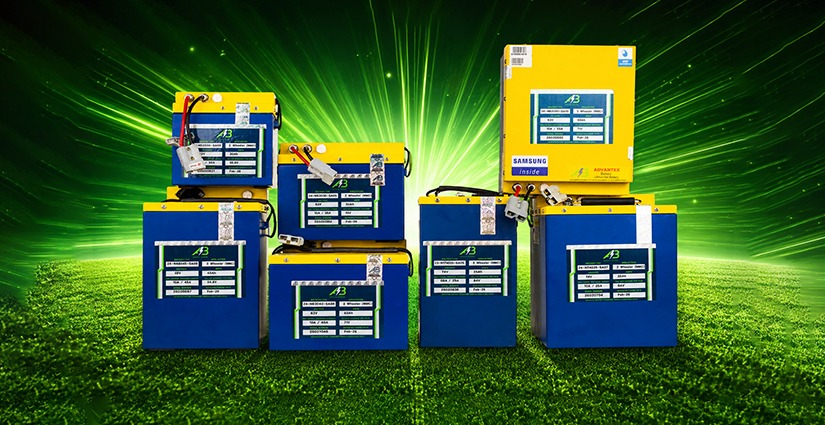
Energy storage is undergoing a fundamental shift. Whether it is powering an electric scooter through Bengaluru traffic, backing up a household through a summer outage, or storing solar energy on a rooftop in Rajasthan, the rechargeable lithium battery has become the technology of choice. It is not a passing trend. It is a structural change in how energy is stored and used.
At Advantex Battery, we design and manufacture lithium battery packs built around this technology. This blog explains what makes the rechargeable lithium battery superior to conventional alternatives and why it is becoming the default solution across applications in India and beyond.
What Is a Rechargeable Lithium Battery?
A rechargeable lithium battery is an electrochemical energy storage device that uses lithium ions moving between a cathode and an anode to store and release electrical energy. Unlike single-use batteries, it can be charged and discharged hundreds to over a thousand times while retaining the majority of its original capacity.
The most widely used variants today are lithium-ion (Li-ion) chemistries, including NMC (Nickel Manganese Cobalt), NCA (Nickel Cobalt Aluminium), and LFP (Lithium Iron Phosphate). Advantex battery packs are built on NMC chemistry using Samsung lithium cells, which deliver up to 5,300 mAh capacity per cell — well above the industry average of approximately 4,500 mAh.
Why It Outperforms Traditional Batteries?
1. Higher energy density
Lithium batteries store 200 to 250 Wh/kg — significantly more energy per kilogram than lead-acid batteries, which typically manage 30 to 50 Wh/kg. In practical terms, a lithium battery pack is roughly 75% smaller and 80% lighter than a lead-acid pack of the same usable capacity. For electric vehicles, home backup systems, and solar storage, that difference in size and weight is transformative.
2. Long cycle life
A quality rechargeable lithium battery rated for 1,000 to 1,200 charge-discharge cycles will outlast a standard lead-acid battery by 3 to 5 times. Lead-acid batteries typically need replacement every 12 to 18 months under regular use. Lithium batteries routinely last 3 to 5 years under the same conditions, significantly reducing the total cost of ownership over time.
3. Fast charging
Rechargeable lithium batteries accept charge more efficiently than lead-acid alternatives. While a lead-acid battery may require 8 to 10 hours for a full charge, lithium batteries can be charged to 80% in a fraction of that time depending on the charger and pack design. For EV users and backup power applications where downtime matters, this is a critical advantage.
4. Low self-discharge
Lithium batteries lose charge at a rate of approximately 1 to 2% per month when idle. Lead-acid batteries can lose 4 to 8% per month. For backup and storage applications that may sit unused for weeks, lithium chemistry holds its charge considerably better.
5. Minimal maintenance
Lead-acid batteries require regular water top-ups, terminal cleaning, and equalisation charges. Rechargeable lithium batteries require none of this. A well-designed pack with a good Battery Management System (BMS) operates without routine maintenance for its entire service life.
6. Safety
Modern lithium battery packs incorporate multi-layer protection through the BMS: overcharge protection, over-discharge protection, short circuit protection, over-temperature cutoffs, and cell balancing. Advantex packs also use fire-suppression coating on cells and fuse-based fail-safes, making them safe across the temperature extremes common in Indian climates.
Applications Driving Adoption in India
The rechargeable lithium battery is now the backbone of several high-growth sectors:
- Electric two-wheelers and three-wheelers: India’s EV market for two wheeler battery and three battery solutions has almost entirely moved to lithium. E-rickshaws are now following, with lithium packs replacing lead-acid units as the economics become clear over 3 to 5 year ownership cycles.
- Home and commercial inverters: Lithium inverter batteries deliver longer backup times per unit of space and eliminate the maintenance burden of lead-acid units. They are well-suited to Indian grid conditions where outages can be frequent.
- Solar energy storage: Rooftop solar installations increasingly pair with lithium storage to capture surplus generation. The combination of high cycle life and low self-discharge makes lithium ideal for daily charge-discharge in solar systems.
- Industrial and telecom backup: Telecom towers, UPS systems, and industrial backup applications are transitioning to lithium for its reliability, compact footprint, and reduced total cost.
The Advantex Approach
At Advantex Battery, we build rechargeable lithium battery packs from the cell up. Our packs use Samsung lithium cells, one of the highest-performing lithium cell options available, tested and graded before assembly. Every finished pack goes through 100% functional testing before dispatch.
Our Battery Management Systems include smart connectivity, real-time monitoring, and multi-layer protection designed for Indian operating conditions — including high ambient temperatures, variable grid quality, and the vibration demands of two and three wheeler applications.
Conclusion
The rechargeable lithium battery is not simply a better battery. It is a different category of energy storage — lighter, longer-lasting, faster-charging, and lower-maintenance than anything that came before it. As India scales its EV ambitions and renewable energy infrastructure, lithium chemistry sits at the centre of every meaningful application.
Advantex Battery is proud to be part of that transition. As a top lithium battery manufacturer in India, we provide lithium battery solutions for electric vehicles, inverters, or energy storage, get in touch with our team.