
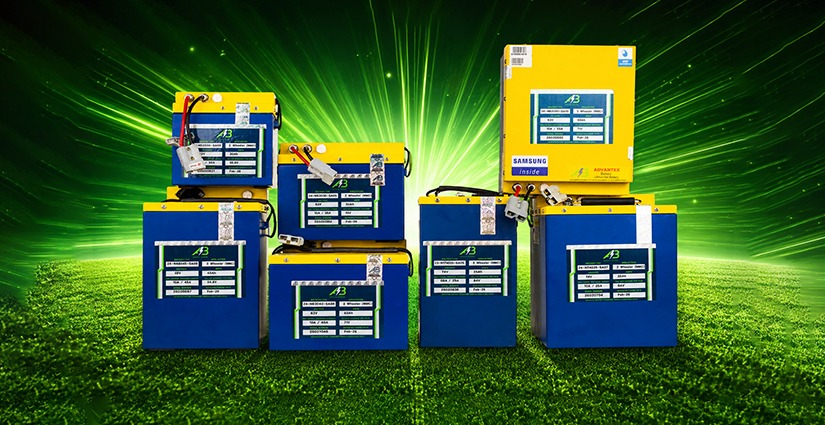
India’s electric two-wheeler market has crossed a critical threshold. More than 10 lakh units were sold in FY 2024-25, and the category is growing faster than any other EV segment. Behind this growth is a single enabling technology — the lithium two wheeler battery — without which the economics and performance of electric scooters and motorcycles simply would not work.
This post covers what separates lithium battery technology from the alternatives in two-wheeler applications, and why it has become the trusted power source for EV manufacturers across India.
The Shift From Lead-Acid to Lithium in Two-Wheelers
Early electric two-wheelers used lead-acid batteries for one simple reason: they were cheap and familiar. But in everyday use, the weaknesses of lead-acid became apparent quickly. Low energy density meant short range. Heavy weight affected handling. Frequent replacement — typically every 12 to 18 months — eroded the cost savings that had attracted buyers to EVs in the first place.
The transition to lithium-ion chemistry changed the picture entirely. Lithium two wheeler battery are 75 to 80% lighter than lead-acid equivalents of the same usable capacity, last 3 to 5 times as long, charge faster, and require zero maintenance. The result is an EV that actually makes economic sense across a full ownership cycle.
Key Reliability Factors in Lithium Two Wheeler Battery
1. High energy density for practical range
Lithium NMC cells deliver 200 to 250 Wh/kg of energy density. In a standard electric scooter, this translates to a battery pack that provides 60 to 100 km of real-world range while weighing 8 to 14 kg — compared to a lead-acid pack of similar capacity that would weigh 25 to 35 kg and deliver less actual range due to voltage sag under load.
For daily commuters — covering 20 to 40 km per day in cities — this means charging every 2 to 3 days rather than every evening, and carrying a battery that does not meaningfully affect the vehicle’s balance or handling.
2. Long cycle life and durability
A lithium two wheeler battery built with quality NMC cells is rated for 1,000 to 1,200 charge-discharge cycles before it drops to 80% of its original capacity. At one charge per day, this represents 3 to 4 years of daily use. With more moderate usage patterns, the same pack can remain in service for 5 years or more.
Lead-acid batteries, under the same daily-use conditions, typically degrade to replacement-worthy levels within 12 to 18 months. The lithium battery’s superior cycle life is one of the most important factors in the total cost of ownership calculation for EV buyers.
3. Consistent voltage output
One of the most practically important differences between lithium and lead-acid batteries is how they deliver power across the discharge cycle. A lead-acid battery’s voltage drops significantly as it discharges, which means the vehicle loses performance noticeably before the battery is depleted. A lithium battery maintains a flat discharge curve, delivering consistent voltage — and therefore consistent motor performance — across most of its usable capacity.
For riders, this means predictable acceleration and consistent throttle response right up to the point where the battery genuinely needs a charge. It also reduces stress on motor controllers that are calibrated for stable input voltage.
4. Fast charging capability
Lithium two wheeler battery accept charge efficiently. Depending on pack size and charger rating, a typical electric scooter battery can be charged from 20% to 80% in 2 to 4 hours. A full charge is generally achievable in 4 to 6 hours. Lead-acid batteries require 8 to 10 hours for a comparable charge and suffer accelerated degradation if charged too quickly.
For commercial riders — delivery agents, e-rickshaw operators, cab aggregators — faster charging directly translates to more daily working hours and lower revenue loss from downtime.
5. Lightweight design and vehicle performance
Weight is a direct performance variable in two-wheelers. Every kilogram added to the vehicle reduces range, affects handling, and increases braking distance. A lithium battery pack weighs approximately 80% less than a lead-acid pack of the same usable energy capacity.
In a 60V / 30Ah electric scooter pack, for example, a lithium pack typically weighs 8 to 10 kg. A comparable lead-acid pack would weigh 28 to 35 kg. The weight saving alone meaningfully increases range, improves agility, and reduces wear on tyres, brakes, and suspension.
6. Zero maintenance
Lead-acid batteries require regular maintenance: water top-ups for flooded variants, terminal cleaning, equalisation charges, and temperature monitoring to prevent sulphation. Lithium batteries require none of this. A properly designed pack with a quality Battery Management System (BMS) monitors cell health, balances charge across cells, and manages temperature automatically throughout its service life.
For everyday EV users, especially in commercial use cases, this is one of the biggest advantage of switching to a lithium battery for bike applications.
7. Safety systems
Modern lithium two wheeler battery incorporate multiple layers of protection. At the cell level, quality NMC cells from manufacturers like Samsung include internal safety mechanisms. At the pack level, the BMS provides overcharge protection, over-discharge protection, short circuit protection, cell balancing, and temperature monitoring. Advantex packs additionally include fire-suppression coating on cells, ingress protection against dust and moisture, and fuse-based fail-safes for fault conditions.
These systems ensure that the battery operates safely across the temperature range, vibration levels, and riding conditions typical in India — including peak summer temperatures above 40°C in many regions.
How Lithium Compares to Lead-Acid in Two-Wheeler Applications?
A direct comparison across the key performance dimensions:
- Energy density: Lithium 200-250 Wh/kg vs Lead-acid 30-50 Wh/kg
- Weight (equivalent capacity): Lithium approximately 80% lighter
- Volume (equivalent capacity): Lithium approximately 75% smaller
- Cycle life: Lithium 1,000-1,200 cycles vs Lead-acid 300-500 cycles
- Charging time (full): Lithium 4-6 hours vs Lead-acid 8-10 hours
- Maintenance: Lithium zero vs Lead-acid regular intervention required
- Discharge curve: Lithium flat (consistent performance) vs Lead-acid sloped (performance drops with charge level)
The Advantex Battery Approach to Two-Wheeler Packs
Advantex Battery is a trusted lithium battery company that manufactures lithium battery packs designed specifically for electric two-wheelers in India. Our packs use Samsung NMC cells — graded and sorted before assembly — built into packs with smart BMS, multi-layer protection, and thermal management suited to Indian conditions.
We follow a four-stage quality framework: 100% cell evaluation, 100% component testing before assembly, full batch and operator traceability for every production step, and 100% finished pack testing before dispatch. Every pack shipped carries a full test record.
Our two wheeler battery solutions are designed for vehicle manufacturers and fleet operators who need reliable, consistent performance across thousands of units and multiple years of field operation, making us a trusted lithium battery manufacturer in India.
Conclusion
The reliability of an electric two-wheeler begins with the reliability of its battery. Lithium NMC technology — with its high energy density, long cycle life, consistent discharge profile, fast charging, and zero-maintenance operation — has set a standard that makes electric mobility genuinely practical and commercially viable in India.
Advantex Battery builds two wheeler battery packs that meet this standard. If you are an EV manufacturer, vehicle assembler, or fleet operator looking for a trusted lithium battery partner, get in touch.