
For anyone who has sat through a 4-hour power cut on a summer afternoon in India, reliable backup power is not an abstract concern. It is a practical necessity. For decades, lead-acid batteries powering conventional inverters have been the standard answer. They were affordable and available, and for most purposes, they worked.
Today, the lithium inverter battery offers a meaningfully better alternative. It is not simply a newer technology — it is a different category of performance that addresses the real limitations of lead-acid backup systems in a direct and measurable way. This post explains what those differences are and why they matter.
What Is a Lithium Inverter Battery?
A lithium inverter battery is a rechargeable lithium battery pack designed to work with an inverter for home or commercial backup power. Rather than the lead-acid chemistry used in conventional inverter batteries, it uses lithium-ion cells — the same fundamental technology that powers EV battery packs — adapted and configured for stationary backup applications.
Key parameters for inverter battery applications include capacity (kWh), discharge depth (how much of the stored energy can actually be used), charge efficiency, cycle life, and maintenance requirements. Lithium chemistry is superior to lead-acid on every one of these dimensions.
Where Lead-Acid Falls Short?
Lead-acid inverter batteries have well-understood limitations that have not changed despite decades of incremental improvement:
- Usable capacity: Lead-acid batteries should not be discharged below 50% of their rated capacity without accelerating degradation. In practice, a 150Ah lead-acid battery delivers roughly 75Ah of usable energy. A lithium battery of the same rating can be safely discharged to 80 to 90%, delivering significantly more actual backup time.
- Cycle life: A quality lead-acid inverter battery typically lasts 300 to 500 cycles. At one discharge-recharge cycle per day during frequent outages, this means replacement every 1 to 1.5 years.
- Charging time: Conventional lead-acid batteries require 8 to 10 hours for a full charge. This creates a real problem during extended outage periods when multiple charge cycles may be needed in a single day.
- Maintenance: Flooded lead-acid batteries require periodic water top-ups, terminal maintenance, and equalisation charging. These are not complicated tasks, but they require regular attention and are easy to neglect.
- Size and weight: A 150Ah lead-acid battery typically weighs 40 to 50 kg. Equivalent lithium capacity weighs 8 to 12 kg. In urban homes and offices where space is limited, the footprint of a lead-acid battery bank is a genuine inconvenience.
- Environmental concerns: Lead-acid batteries contain lead and sulphuric acid, both of which create disposal and environmental challenges. Improper disposal is common in India and poses real hazards.
How Lithium Inverter Battery Address These Limitations?
1. More usable backup time from the same capacity
Because lithium batteries can be safely discharged to 80 to 90% depth of discharge (vs 50% for lead-acid), a 100Ah lithium inverter battery delivers as much usable energy as a 150 to 160Ah lead-acid unit. In homes running essential loads — fans, lights, a refrigerator — this translates directly into longer backup per charge.
2. Significantly longer service life
Quality lithium inverter batteries are rated for 1,000 to 1,200 charge-discharge cycles while maintaining over 80% of original capacity. This is 3 to 4 times the cycle life of a comparable lead-acid unit. At typical household usage patterns in a city with daily outages, a lithium inverter battery can last 5 to 7 years before requiring replacement — compared to 1 to 2 years for lead-acid.
The economics follow directly: a lithium battery that costs 2 to 2.5 times more than lead-acid but lasts 4 to 5 times longer is cheaper on a per-year basis, even before accounting for the elimination of maintenance costs.
3. Faster recharge
Lithium inverter batteries charge at significantly higher rates than lead-acid. Most residential lithium backup systems can be fully recharged in 3 to 4 hours — compared to 8 to 10 hours for lead-acid. During extended outage periods with multiple interruptions, this difference is critical. The battery is ready to back up again in the afternoon from a morning charge, rather than still recharging when the next outage begins.
4. Zero maintenance
Lithium inverter batteries require no maintenance. There is no water to top up, no terminals to clean, no equalisation cycle to schedule. A properly configured system with a BMS manages cell balancing, temperature monitoring, and state-of-charge reporting automatically. The owner’s interaction with the battery is limited to reading the status display.
5. Compact and lightweight
A lithium inverter battery is approximately 75% smaller in volume and 80% lighter than an equivalent lead-acid unit. For a home with limited storage space — a common constraint in Indian apartments and small commercial establishments — this is a practical advantage. Lithium battery packs can be mounted on walls, installed in tighter spaces, and moved without requiring multiple people.
6. Safety
Modern lithium inverter batteries include comprehensive protection: overcharge and over-discharge protection, short circuit protection, temperature monitoring and cutoff, and cell balancing through the BMS. Unlike lead-acid batteries, they do not produce hydrogen gas during charging (which creates fire risk in enclosed spaces) and do not contain liquid acid that can spill or corrode surrounding surfaces.
Ideal Applications for Lithium Inverter Batteries
Lithium inverter batteries are well-suited to a wide range of backup power applications:
- Residential homes — particularly in cities and towns with frequent power outages
- Small offices and commercial establishments where downtime has direct business cost
- Retail shops where point-of-sale systems, lighting, and fans must stay operational
- Solar home systems where a battery that charges and discharges daily needs long cycle life
- Small industries and workshops with sensitive equipment that benefits from clean, stable backup power
Lithium vs Lead-Acid: Summary Comparison
- Usable capacity (100Ah rated): Lithium ~85-90Ah vs Lead-acid ~50Ah
- Cycle life: Lithium 1,000-1,200 cycles vs Lead-acid 300-500 cycles
- Charging time: Lithium 3-4 hours vs Lead-acid 8-10 hours
- Weight (equivalent capacity): Lithium ~80% lighter
- Maintenance: Lithium none vs Lead-acid regular
- Service life (typical household use): Lithium 5-7 years vs Lead-acid 1-2 years
A Note on the Overlap With Our Existing Inverter Content
Advantex is a top lithium battery manufacturer in India has previously published a detailed comparison of lithium inverter batteries against lead-acid systems. This post is intended to complement that content with a focus on the specific failure modes of traditional backup systems and how lithium technology addresses each one. For readers evaluating specific technical specifications, we recommend reading both posts together.
Why Advantex Battery?
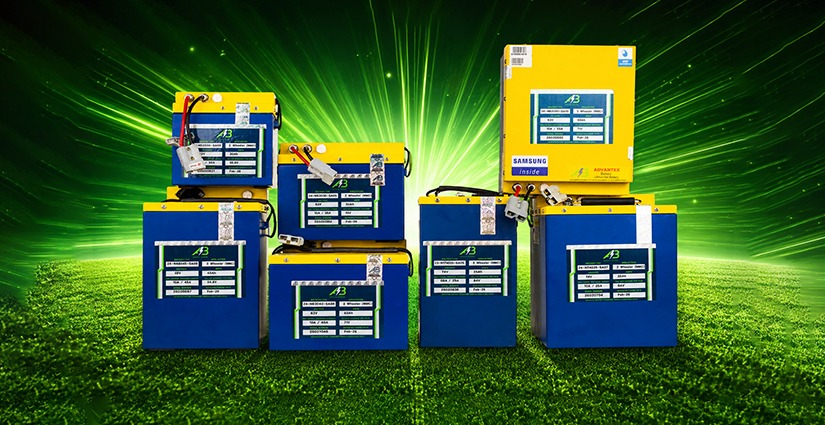
Advantex Battery manufactures lithium battery packs for inverter and backup applications built on the same NMC cell technology and quality framework as our EV battery range. Our inverter battery combo solutions use Samsung lithium cells, multi-layer BMS protection, and are designed and tested for the voltage, discharge, and temperature conditions common in Indian residential and commercial environments.
Our team is available to discuss system sizing, compatibility with existing inverters, and the right solution for your specific backup requirements.
Conclusion
The lead-acid inverter battery did its job for decades. But its limitations — limited usable capacity, short cycle life, slow charging, and ongoing maintenance requirements — are now well understood. The lithium inverter battery addresses every one of these limitations directly, and does so at a total cost of ownership that is competitive over a 5-year horizon.
For homes, offices, and commercial establishments making a new backup power investment, lithium is the rational choice. Advantex Battery is here to help you make the transition.